
The tractor is shut off and the key is in your pocket. That rear remote line can still be sitting on a few thousand psi. Trapped pressure is the part that catches people off guard, and it is the reason learning how to disconnect a hydraulic hose from a tractor deserves a set order instead of a quick yank on the coupler.
Greenshields has crimped hundreds of hydraulic assemblies at our Everett counter and plenty of the lines that land on it were pulled off wrong the first time. Some arrive chewed at the threads. Others show up packed with grit that scored a valve on the next startup.
This guide walks the whole sequence, that includes:
- Shutting the machine down and dropping the load
- Relieving the pressure trapped in the line
- Spotting whether you have a quick-connect or a threaded fitting
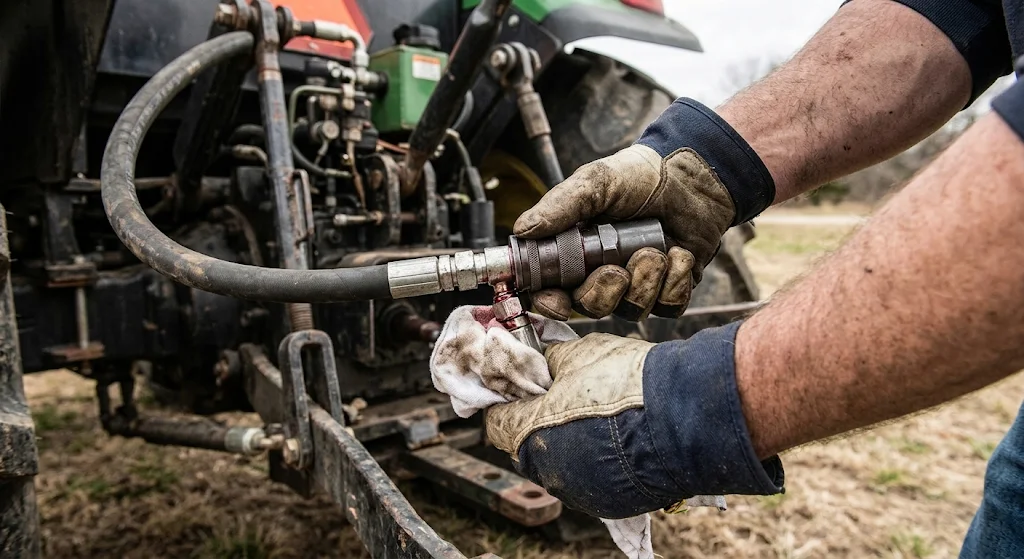
- Unhooking the coupler without fighting it
- Pulling the hose and capping the ends so dirt stays out
- Checking the hose for damage before it goes back on
And now, without further ado, let’s jump right in.
How to Disconnect Hydraulic Hose From Tractor the Safe Way
Four moves, in the right order, cover how to disconnect hydraulic hose from tractor without any trouble. Skipping any one of them is how a quick attachment swap turns into an injury or a circuit full of dirt. Work them in order, top to bottom.
Shut the Machine Down and Drop the Load
A safe disconnect starts with the machine dead and the weight on the ground. Park on level dirt and kill the engine. Pull the key and set the brake. Then lower everything the hydraulics are holding up.
Lower the loader bucket all the way to the ground. The three-point hitch and any raised implement come all the way down too. A raised loader arm is stored energy, and that weight keeps the cylinder loaded long after the engine goes quiet. This is the step people skip most, and it is the one that drops a boom on a boot.
Relieve the Pressure Before Anything Else
With the load down, the line can still hold a charge. Heat is the reason. Oil that ran hot all day stays warm after you shut off, and warm oil keeps a surprising amount of pressure locked in the line.
To bleed it, turn the key to on without starting the engine, then work each remote lever through its full stroke both ways. Dropping a tractor remote into the float detent walks off a good bit of that pressure on its own. Give it a minute before you touch a fitting.
Worth being blunt about the danger. Fluid escaping a cracked fitting comes out as a fine mist, and at working pressure that mist can inject through skin before you feel it. Our onsite hydraulic hose repair crew has seen what that mist does to a hand. Take the pressure down first, every single time. The hydraulic maintenance tips guide covers safe ways to bleed a circuit if you want the longer version.
How to Unhook the Hydraulic Hoses From a Tractor at the Coupler
Knowing how to unhook hydraulic hoses from tractor circuits starts with matching your move to the connector. Figure out what kind you have first, because the type sets how it comes apart. Most tractor remotes use quick-connect couplers. Pull the sliding collar back to free the two halves. A few use a ball-and-poppet design. Others seal on a flat face built to the ISO 16028 standard, common on newer skid steers and their attachments.
If a quick coupler will not let go, stop hauling on it. The resistance is trapped pressure, so head back and cycle the lever again. A coupler weeping only when mated is a different problem, and our guide to fixing a leaking quick-connect coupler digs into that one.
Threaded fittings ask for a different touch. Older tractors and auxiliary lines often run a JIC 37-degree flare or an ORFS end. Hold a backup wrench on the fitting body while you turn the nut, so the port and the hard line never take the twist. Not sure which end you are looking at? The hydraulic fitting types guide walks through the common ones. Working the fitting this way is how to unhook hydraulic hoses from tractor remotes without rounding a nut.
How to Remove the Hydraulic Hose From a Tractor Without Trapping Dirt
With the pressure gone and the coupler open, the hose pulls free. The real skill in how to remove hydraulic hose from tractor lines is keeping dirt out of the open ends. Keep a drain pan and rags under the joint, because even a bled line holds a slug of oil that lets go the second the ends part. Let it drip into the pan instead of down the frame and into the soil.
Cap both ends the moment they separate. Plug the hose end, then cap the tractor port. An open coupler pulls in grit like a magnet, and one speck on a sealing face can score a valve or wreck the next hookup. Getting this right is most of how to remove hydraulic hose from tractor circuits without setting up a fresh failure a week later.
How to Remove Hydraulic Hoses From a Tractor Without Mixing Them Up
Pulling several lines at once adds one more job. Tag each hose before it comes off. A strip of tape and a marker save you from guessing which port a line feeds when it is time to reconnect. This one habit is the quiet core of how to remove hydraulic hoses from a tractor without a puzzle at reassembly. If a line was rubbing a bracket or a frame rail on the way out, make a note of it, since that chafe is behind a lot of the hoses we replace. A few hydraulic hose protectors on the new line stop the same wear from starting over.
Check the Hose for Damage Before You Reconnect
A disconnect is a good moment to size up the hose in your hands while the machine is safe and the line is off. OSHA published a bulletin listing the conditions that call for a hose replacement, and it makes a clean checklist. A hose is done when you spot any one of these.
- Oil weeping at the hose surface or where the hose meets the coupling
- Blistering, or a cover that has swelled out of its normal shape
- Leakage at a threaded or clamped joint that will not tighten out
- Hard abrasion or scrubbing worn into the cover, the tube, or a fitting
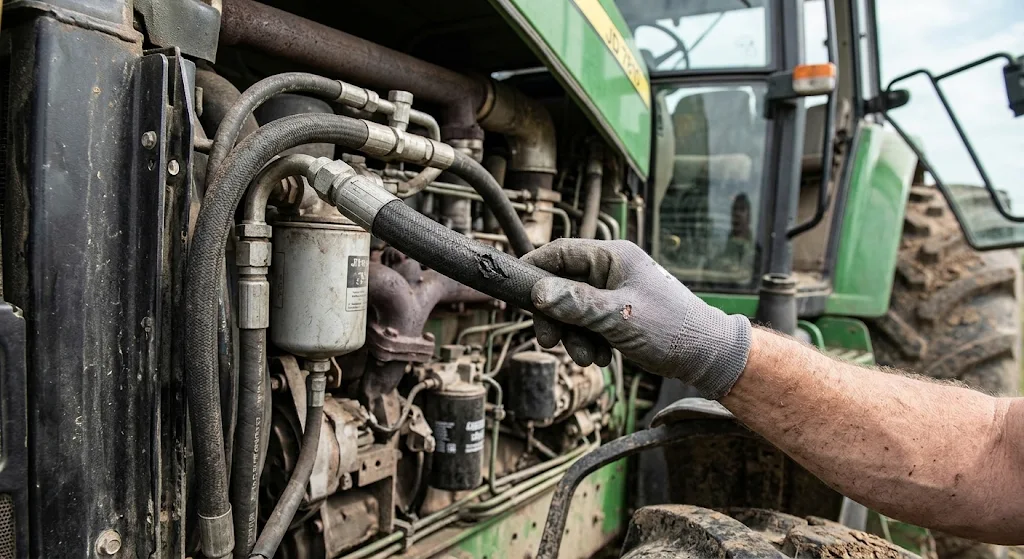
Any one of these means the line is spent, so plan on a fresh assembly rather than hanging the old one back up. Check the OSHA bulletin for the full list. Want the broader picture of what fails and why? Our guide to the most common hydraulic problems breaks down each one.
When the Hose Has Had Enough
Plenty of lines come off in good shape when you are just changing an attachment. The ones that show up cracked, chafed through, or weeping at the crimp are done, so leave them off. Drop the worn assembly at our hydraulic hose shop. We will build a fresh one to the right length, ends, and pressure rating. The part in your hand is the surest spec sheet there is, so bring it along.
Some machines are too big to haul in. When the tractor or skid steer cannot come to the counter, our tractor and skid steer hydraulic hose repair service covers those machines and the couplers they run.
Knowing how to disconnect a hydraulic hose from a tractor safely is half the job. Spotting a finished hose is the other half. Ring the counter at 425-259-0111 or send your details through our contact page, and we will size a fresh line for your tractor and turn it around quick.